 Translate
Best Chest Exercises: Anatomy, Muscle Targeting & Workouts
By John Smith Fitness · 4 min read
This post reflects the author's own views, not Meal & Muscle's — see our content policy for how claims here are handled.
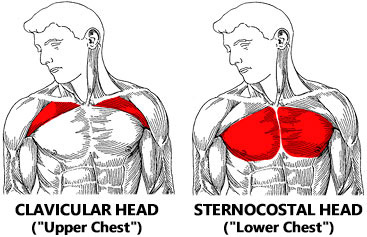
Understanding Chest Anatomy and Muscle Targeting To build a functional and balanced chest, it helps to understand the underlying anatomy. The main muscle group of the chest is the pectoralis major, a large fan-shaped muscle. Anatomical literature generally divides the pectoralis major into two primary regions: Clavicular Portion (Upper Chest): Originates at the collarbone. Pressing at an incline or using low-to-high movements can place greater emphasis on this area. Sternocostal Portion (Mid/Lower Chest): Originates along the breastbone and ribs, making up the bulk of the chest. Flat pressing and high-to-low movements can place greater emphasis on different regions of the sternocostal portion.
Beneath this sits the pectoralis minor, a smaller muscle that assists with stabilizing the shoulder blade. A complete chest routine also heavily involves supporting muscles like the anterior deltoids (front shoulders) and the triceps brachii (back of the arms). You can train the pectoralis major through different shoulder and arm positions and movement patterns for balanced development. Explore video demonstrations and detailed guides for all of these movements in the Meal & Muscle Chest Exercise Library.
Warm-Up & Mobility Before moving into heavy pressing, it is helpful to prepare the body and encourage mobility through the upper back and chest. Dynamic Chest Stretch: A beginner-friendly mobility movement consisting of controlled arm swings. This is used to prepare the muscles and joints for the movement demands of your workout. Chest Stretch on Stability Ball: A movement where the user lies back over an exercise ball to stretch the chest musculature and encourage thoracic (upper back) spine mobility.
Home Exercises (Bodyweight & Minimal Space) Home chest training relies on varying your body leverage to adequately challenge the muscles. Clock Push-Up: An intermediate bodyweight exercise that involves rotating your hand placements in a circular pattern between repetitions. It trains the chest and triceps while adding greater stabilization and movement demands compared to a standard push-up. Decline Push-Up: By elevating your feet on a sturdy surface, this variation shifts your body weight forward, which can place greater emphasis on the clavicular portion of the pectoralis major and the front shoulders.
Basic Equipment Workouts (Dumbbells & Bands) Adding basic gear allows for variable resistance vectors and movement paths that you cannot easily replicate with body weight alone. Bench Press - With Bands: A flat bench pressing movement utilizing resistance bands. The bands add accommodating resistance, increasing external resistance toward the top of the press. Alternating Floor Press: A pressing movement performed lying face-up on the floor using dumbbells or kettlebells. The floor limits the depth of the press and can reduce shoulder extension compared with a full-range bench press. Bent-Arm Dumbbell Pullover: An intermediate exercise where a dumbbell is arced behind the head while lying on a bench. This movement trains the pectoralis major and also involves the latissimus dorsi (back) and shoulder musculature.
Gym & Machine Workouts (Barbells & Cables) Heavy gym equipment provides high mechanical load and allows for adjustments in external stability. Barbell Bench Press - Medium Grip: A foundational compound pressing exercise for developing the pectoralis major, triceps, and anterior deltoids. Incline Dumbbell Press: Performed on a bench angled between 30 and 45 degrees, using dumbbells allows for an independent, freer range of motion at the shoulder joint while placing greater emphasis on the clavicular portion (upper region) of the chest. Cable Chest Press: Trains the pectoralis major with substantial contribution from the triceps and anterior deltoids. Unlike free weights, the cable stack provides relatively continuous external resistance through the movement. Cable Crossover: A cable fly variation that can place greater emphasis on the lower region of the sternocostal portion when performed from a high-to-low angle. Cable Iron Cross: A standing cable fly variation using mid-height pulleys. It engages the pectoralis major and anterior deltoids while providing relatively continuous resistance across a wide horizontal movement arc. Butterfly (Pec Deck): A machine fly variation that provides more external stability and less stabilization demand while training the pectoralis major.
Safety and Programming Tips Warm Up Appropriately: Use an appropriate warm-up before heavy pressing to prepare the muscles and joints for the movement. Start with lighter sets and progressively increase the load. Control the Weight: Controlling the lowering (eccentric) phase of the lift is good coaching practice. Keep in mind that both eccentric and concentric (pushing) actions contribute to muscle hypertrophy, so focus on smooth, deliberate repetitions in both directions. Listen to Your Body: If a specific pressing angle causes joint discomfort, modify your range of motion or switch equipment. Consult a healthcare professional or physical therapist if pain persists.
Sources & references
Listed by the author — not verified by Meal & Muscle.
- National Institutes of Health (NIH) / PubMed Central – Anatomy, Thorax, Pectoralis Major Major. https://www.ncbi.nlm.nih.gov/books/NBK525991/ (Last updated: 2023)
- National Institutes of Health (NIH) / PubMed Central – Electromyographic Analysis of Muscle Activation During Push-Up Variations. https://pubmed.ncbi.nlm.nih.gov/26456574/ (2016)
- National Institutes of Health (NIH) / PubMed Central – Muscle Activity in the Dumbbell Pullover Exercise. https://pubmed.ncbi.nlm.nih.gov/21975179/ (2011)
- National Institutes of Health (NIH) / PubMed Central – Hypertrophic Effects of Concentric vs. Eccentric Muscle Actions: A Systematic Review and Meta-analysis. https://pubmed.ncbi.nlm.nih.gov/28486337/ (2017)
- Meal & Muscle – Complete Chest Exercises Database and Reference Library. https://mealandmuscle.fit/exercises/chest (2026)
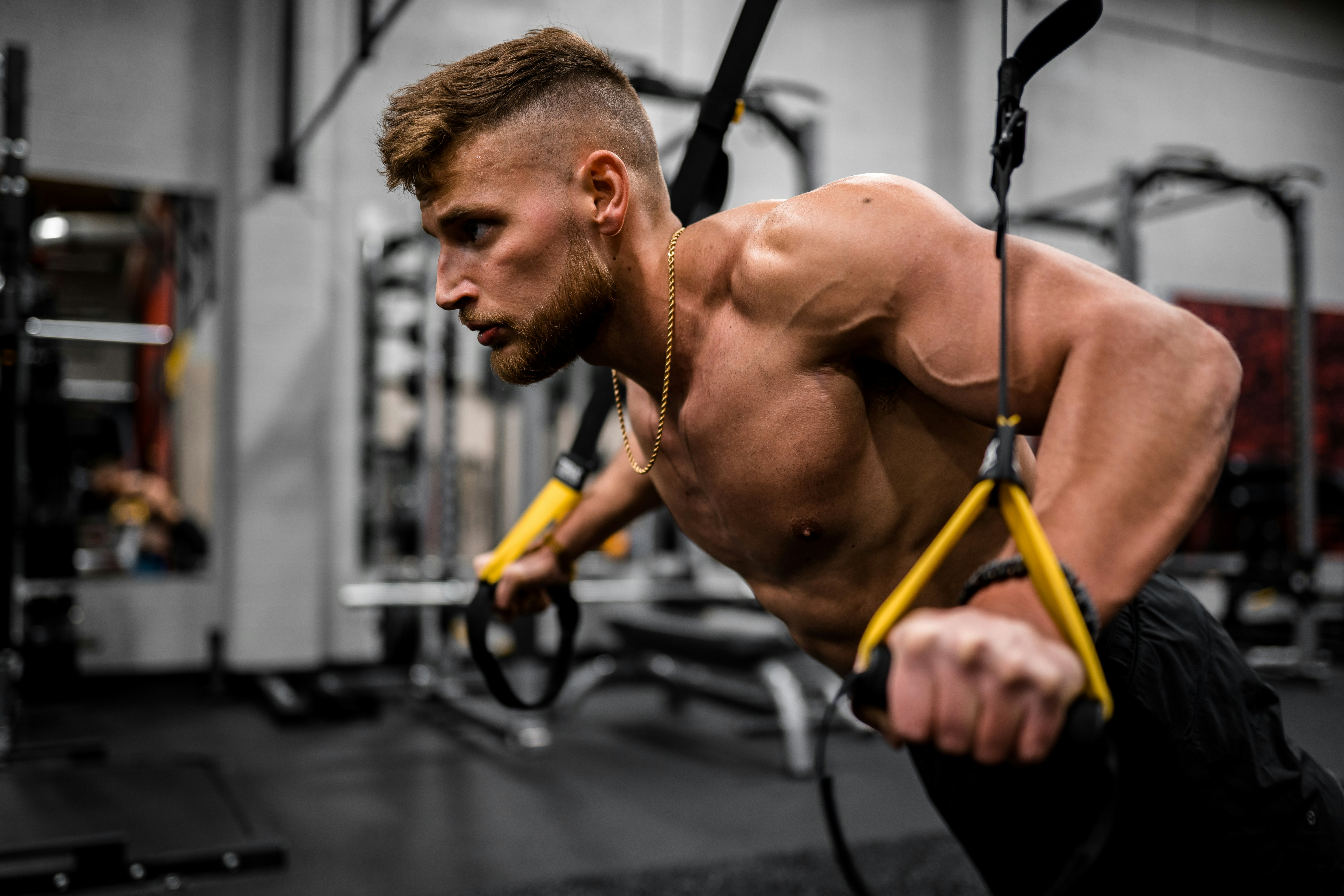
- Photo by Anastase Maragos on Unsplash
- Photo by <a href="https://unsplash.com/@visualsbyroyalz?utm_source=unsplash&utm_medium=referral&utm_content=creditCopyText">Anastase Maragos</a> on <a href="https://unsplash.com/photos/topless-man-in-black-pants-holding-black-and-yellow-exercise-equipment-fG0p4Qh_aWI?utm_source=unsplash&utm_medium=referral&utm_content=creditCopyText">Unsplash</a>

Comments
Log in or create an account to comment.
No comments yet — be the first.