 Translate
Best Back Exercises: Muscle Targets & Execution Details
By John Smith Fitness · 8 min read
This post reflects the author's own views, not Meal & Muscle's — see our content policy for how claims here are handled.
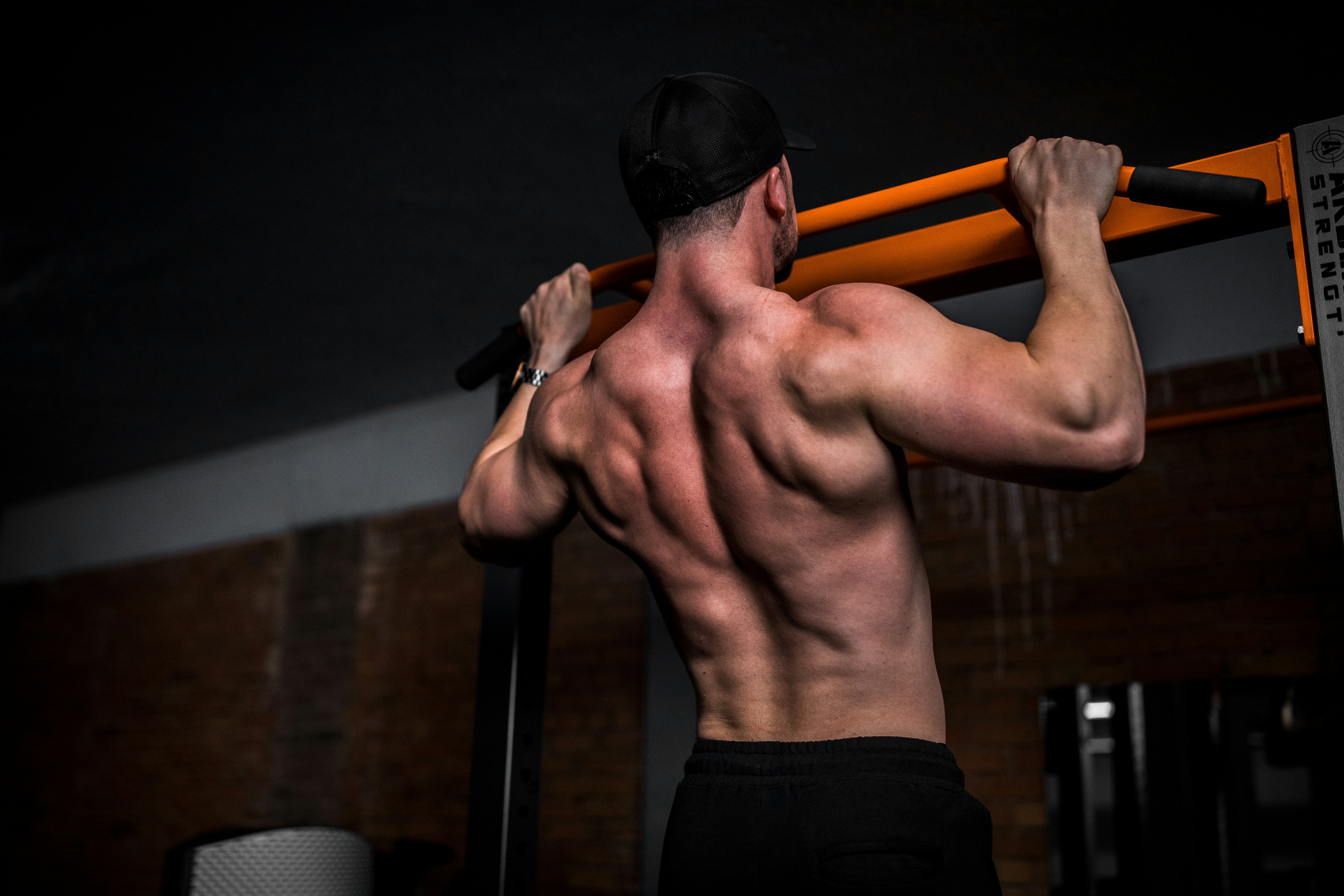
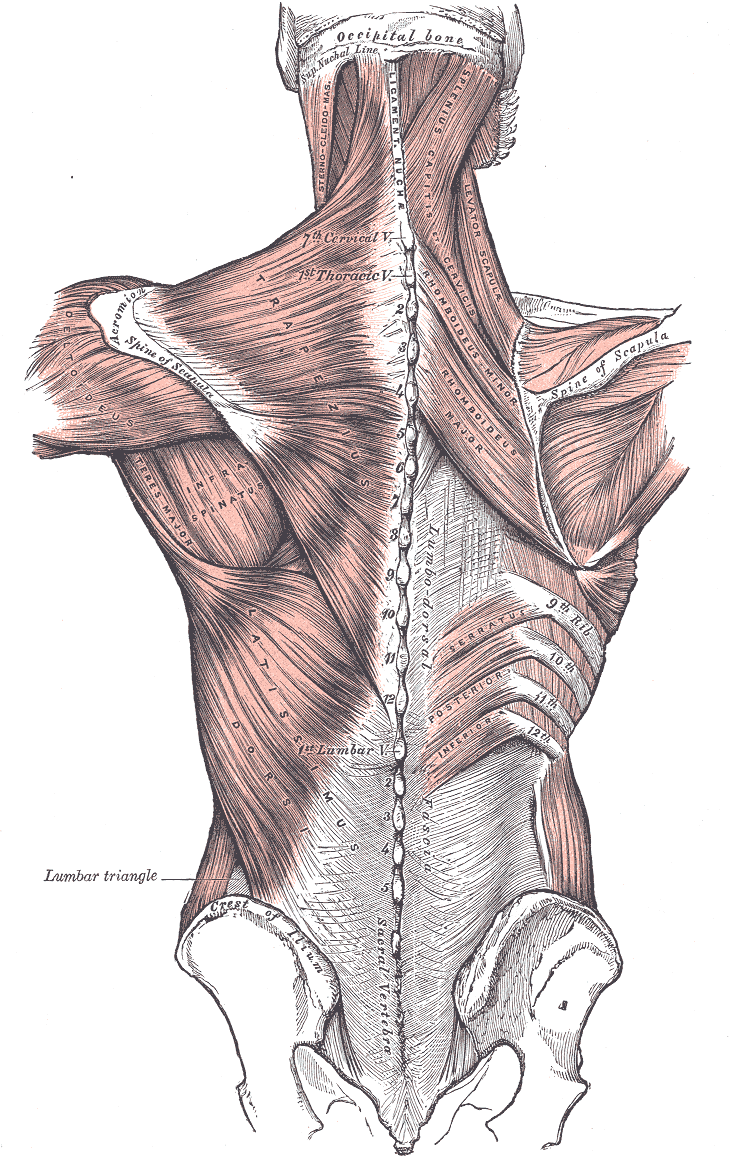
The back contains multiple overlapping muscle groups that contribute to pulling performance, scapular control, spinal stability, and the ability to maintain posture under load. A balanced program should include both vertical and horizontal pulling patterns, plus exercises that build strength and tolerance across the posterior chain. Latissimus Dorsi (Lats): Large, broad muscles spanning the mid-to-lower back that contribute to shoulder extension, adduction, and internal rotation. Pull-ups, lat pull-downs, and several rowing variations train the lats. Trapezius (Traps): The trapezius has upper, middle, and lower portions. Together, they contribute to scapular elevation, retraction, depression, and upward rotation, depending on arm position and task. Rhomboids (Major and Minor): Located beneath the middle trapezius, these muscles assist scapular retraction, downward rotation, and scapular stabilization against the thoracic wall during many rowing movements. Erector Spinae: Muscles that run alongside the spine. They contribute to spinal extension and, during many loaded lifts, work primarily isometrically to resist excessive spinal flexion.
1. Lat Focus: Vertical Pulling & Back Development
The latissimus dorsi are broad muscles that contribute to shoulder extension, adduction, and internal rotation. Vertical pulls strongly train the lats and are commonly included in programs designed to build overall back size.
Pull-Up Primary movement / training emphasis: Vertical pulling Key muscles involved: Latissimus dorsi, biceps brachii, brachialis, teres major, scapular stabilizers Other contributors: Forearms, posterior deltoids, trunk musculature Execution cues: Hang from a stable overhead bar using an overhand grip you can control comfortably. Keep the rib cage and torso controlled, then pull by driving the elbows down toward the sides of the body. Finish at a comfortable top position and lower under control. Who it suits / progression option: Use band assistance or an assisted pull-up machine when full bodyweight repetitions are not yet available.
Chin-Up Primary movement / training emphasis: Vertical pulling with greater elbow-flexor contribution Key muscles involved: Latissimus dorsi, biceps brachii, brachialis, brachioradialis, upper-back musculature Other contributors: Forearms and trunk stabilizers Execution cues: Use a shoulder-width underhand grip. Pull the elbows down and back while keeping the torso controlled. Chin-ups commonly feel more biceps-dominant than pull-ups due to the supinated grip, but still train the lats substantially. Who it suits / progression option: Excellent bodyweight option for lifters who find overhand pull-ups uncomfortable on the shoulders or wrists.
Close-Grip Front Lat Pulldown Primary movement / training emphasis: Vertical pulling Key muscles involved: Latissimus dorsi, biceps brachii, brachialis, teres major, scapular stabilizers Other contributors: Rhomboids, trapezius, forearms Execution cues: Sit securely with thighs held under the pads. Use the close-grip handle available in your setup and pull the elbows down toward the torso. Keep the torso mostly stable rather than leaning far backward. Bring the attachment toward the upper chest through a comfortable range. Important note: A close grip alters elbow path and joint comfort, but it should not be presented as a way to isolate the "lower lats."
Full Range-of-Motion Lat Pulldown Primary movement / training emphasis: Vertical pulling through a controlled range Key muscles involved: Latissimus dorsi, biceps brachii, teres major, scapular stabilizers Other contributors: Forearms and trunk musculature Execution cues: Begin overhead, allowing the shoulder blades to move naturally. If comfortable, allow controlled shoulder elevation at the top, then pull the elbows down toward the sides while maintaining a stable trunk. Return slowly under control rather than dropping the weight stack. Who it suits / progression option: Pronated grip widths show broadly similar overall lat activation in biomechanical research; choose a grip width that feels natural and repeatable.
2. Mid-Back Focus: Rows for Scapular Control
Horizontal rows train the lats alongside the middle trapezius, rhomboids, posterior deltoids, and elbow flexors. They are essential for balanced back development and scapular control.
One-Arm Dumbbell Row Primary movement / training emphasis: Unilateral horizontal pulling Key muscles involved: Latissimus dorsi, middle trapezius, rhomboids, posterior deltoids, biceps brachii Other contributors: Forearms, obliques, trunk stabilizers Execution cues: Place one hand and knee on a stable bench if using a supported setup. Hold the dumbbell in the opposite hand with a controlled torso. Pull the elbow toward the hip or lower ribs without rotating excessively to hoist the weight. Lower with control. Who it suits / progression option: Ideal for managing side-to-side strength imbalances and reducing lower-back fatigue compared to standing rows.
Dumbbell Incline Row Primary movement / training emphasis: Chest-supported horizontal rowing Key muscles involved: Middle trapezius, rhomboids, posterior deltoids, latissimus dorsi Other contributors: Biceps brachii, forearms Execution cues: Lie chest-down on an incline bench. Row the dumbbells toward a comfortable point near the torso while keeping the neck relaxed. Finish with comfortable scapular retraction rather than forcing the shoulder blades together as hard as possible. Who it suits / progression option: Great choice for lifters wanting mid-back work without fatigue in the spinal erectors or lower back.
Seated Cable Row Primary movement / training emphasis: Bilateral horizontal pulling Key muscles involved: Latissimus dorsi, middle trapezius, rhomboids, posterior deltoids, biceps brachii Other contributors: Forearms and trunk stabilizers Execution cues: Sit tall with knees slightly bent and feet firmly positioned. Allow a controlled reach forward at the start, then pull the handle toward your torso by driving the elbows back. Keep the torso stable and avoid excessive swinging. Who it suits / progression option: Highly customizable exercise suitable for all experience levels using neutral, wide, or close handle attachments.
Bent-Over Barbell Row Primary movement / training emphasis: Loaded horizontal pulling with trunk stabilization Key muscles involved: Latissimus dorsi, rhomboids, middle trapezius, posterior deltoids, biceps brachii Other contributors: Erector spinae, glutes, hamstrings, forearms Execution cues: Hinge at the hips to a torso angle you can comfortably brace and control. Hold the bar securely and row toward the lower ribs or upper abdomen. Keep the trunk stable, avoid jerking the load, and maintain repeatable technique. Who it suits / progression option: Intermediate-to-advanced lifters. If lower-back fatigue limits row quality, substitute with a chest-supported row or seated cable row.
Inverted Row Primary movement / training emphasis: Scalable bodyweight horizontal pulling Key muscles involved: Latissimus dorsi, middle trapezius, rhomboids, posterior deltoids, biceps brachii Other contributors: Forearms, core, glutes Execution cues: Set a secure bar at waist height. Lie beneath it, grip the bar, and keep the body in a controlled, plank-like line. Pull the chest toward the bar, then lower under control. Who it suits / progression option: Raise the bar or bend the knees to make the movement easier. Lower the bar or elevate the feet to increase difficulty.
3. Posterior Chain: Hip Hinges & Spinal Stabilizers
The erector spinae run along the spine and contribute to spinal extension. During deadlifts and rowing variations, they work isometrically to resist excessive spinal flex while the hips and legs drive the motion.
Barbell Deadlift Primary movement / training emphasis: Full-body hip hinge Key muscles involved: Glutes, hamstrings, quadriceps, erector spinae Other contributors: Latissimus dorsi, trapezius, forearms, trunk musculature Execution cues: Stand with feet positioned so the bar remains close to the shins. Hinge through the hips and knees to grip the bar. Create tension through the trunk, lats, and legs, then push the floor away to stand tall while keeping the bar close to the body. Lower with control. Who it suits / progression option: General population to advanced athletes. Adjust setup (e.g., trap bar or sumo position) based on individual leverage and comfort. Deficit Deadlift Primary movement / training emphasis: Advanced hip-hinge variation with increased range of motion Key muscles involved: Glutes, hamstrings, quadriceps, erector spinae Other contributors: Latissimus dorsi, upper back, forearms, trunk musculature Execution cues: Stand on a stable, low platform (1–2 inches) and execute a deadlift through the extended range of motion. Use conservative loading. Maintain the exact controlled setup and bar path used in a conventional deadlift. Who it suits / safety note: Experienced lifters with established deadlift mechanics and sufficient hip mobility. Not required for general back health or fitness goals. Superman Primary movement / training emphasis: Low-load spinal- and hip-extension practice Key muscles involved: Erector spinae, glutes, hamstrings Other contributors: Upper-back and trunk musculature Execution cues: Lie face-down with arms positioned comfortably. Gently lift the chest and legs slightly off the floor, pause briefly, and lower under control. Avoid forcing end-range hyperextension of the lumbar spine. Who it suits / safety note: Modify or substitute with bird-dogs if repeated end-range extension causes lower-back pinching or discomfort.
4. Mobility, Activation & Movement Preparation
Mobility drills do not "target" a single muscle in the same way as strength exercises. Their purpose is to explore comfortable range of motion, rehearse movement patterns, and prepare joints for loaded work.
Cat Stretch / Cat-Cow Primary purpose: Spinal mobility and movement awareness Key areas involved: Spine, trunk musculature, shoulders, hips Execution cues: Begin on hands and knees. Slowly round the spine upward into flexion within a comfortable range, then reverse into gentle extension. Move fluidly and avoid forcing end-range pressure. Who it suits / safety note: Excellent warm-up or recovery drill for all experience levels. Child’s Pose Primary purpose: Comfortable recovery position and gentle shoulder/hip mobility Key areas involved: Shoulders, lats, hips, and spinal musculature Execution cues: Kneel and sit back toward the heels as comfortable, reaching the arms forward on the floor. Breathe steadily and adjust arm width or knee spacing for comfort. Stretch sensations vary by individual anatomy. Who it suits / safety note: Universal relaxation and light stretch position between high-intensity sets or during warm-downs.
https://mealandmuscle.fit/exercises/back/child-s-pose
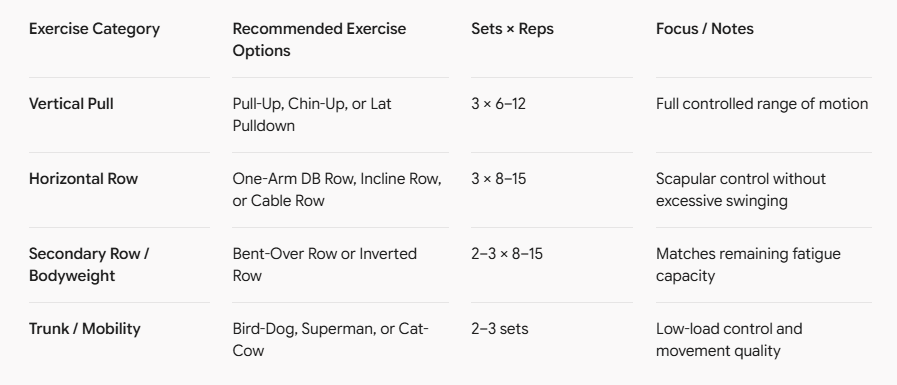
For a balanced back training routine, combine exercises across movement categories: One Vertical Pull: Pull-Up, Chin-Up, or Lat Pulldown One Horizontal Row: Seated Cable Row, One-Arm Dumbbell Row, Incline Row, or Barbell Row One Posterior Chain / Trunk Option: Deadlift variation, Bird-Dog, or Superman One Mobility / Preparation Drill: Cat-Cow or Child's Pose
Safety & Clinical Guidelines
Stop any exercise immediately if it induces sharp, worsening, or radiating pain. Seek a individual assessment from a qualified physical therapist or healthcare provider if you have a history of spinal injury, recent surgical procedures, or persistent joint limitations.
Sources & references
Listed by the author — not verified by Meal & Muscle.
- Grip Width & Lat Activation in Pulldowns:
- Andersen, V., Fimland, M. S., Wiik, E., Skoglund, A., & Saeterbakken, A. H. (2014). Effects of grip width on muscle strength and activation in the lat pulldown. Journal of Strength and Conditioning Research, 28(4), 1135–1142.
- Lusk, S. J., Hale, B. D., & Russell, D. M. (2010). Grip width and forearm orientation effects on muscle activity during the lat pull-down. Journal of Strength and Conditioning Research, 24(7), 1895–1900.
- Pull-Up vs. Chin-Up Kinematics & Muscle Activation:
- Youdas, J. W., Amundson, C. L., Cicero, K. S., Hahn, J. J., Hirt, D. T., & Hollman, J. H. (2010). Surface electromyographic activation patterns and shoulder kinematics during the pull-up and chin-up exercises. Journal of Strength and Conditioning Research, 24(12), 3404–3414.
- Dickie, J. A., Faulkner, J. A., Barnes, M. J., & Riedle, B. L. (2017). Electromyographic analysis of muscle activation during pull-up variations. Journal of Electromyography and Kinesiology, 32, 30–36.
- Deadlift Variations & Erector Spinae Recruitment:
- Martín-Fuentes, I., Oliva-Lozano, J. M., & Muyor, J. M. (2019). Electromyographic activity in deadlift exercise and its variations: A systematic review. PLOS ONE, 14(2), e0211044.
- Neto, W. K., Soares, E. G., Vieira, T. L., Silva, R. R., & da Silva, M. A. (2020). Gluteus maximus and erector spinae activation during deadlift variations. Journal of Human Kinetics, 72(1), 15–23.
- Lower Back Load & Spinal Stabilization (Superman vs. Bird-Dog):
- McGill, S. M. (2002). Low Back Disorders: Evidence-Based Prevention and Rehabilitation. Human Kinetics.
- Ekstrom, R. A., Donatelli, R. A., & Carp, K. C. (2007). Electromyographic analysis of core stabilization exercises. Journal of Orthopaedic & Sports Physical Therapy, 37(12), 754–762.
- Photo by Anastase Maragos on Unsplash - Photo by <a href="https://unsplash.com/@visualsbyroyalz?utm_source=unsplash&utm_medium=referral&utm_content=creditCopyText">Anastase Maragos</a> on <a href="https://unsplash.com/photos/topless-man-in-black-shorts-holding-orange-bar-IZw5zLHMfd4?utm_source=unsplash&utm_medium=referral&utm_content=creditCopyText">Unsplash</a>

Comments
Log in or create an account to comment.
No comments yet — be the first.