 Translate
Before You Try "Miracle" Weight Loss Shots: Here’s What the Fitness Industry Isn't Telling You
By John Smith Fitness · 4 min read
This post reflects the author's own views, not Meal & Muscle's — see our content policy for how claims here are handled.

Right now, you probably can't scroll through TikTok or Instagram without seeing someone talking about a crazy weight loss transformation. A lot of this is because of massive leaps in medical science. We've entered an era where medicine can actually change how much hunger we feel or how our bodies build muscle. But with all the hype, it is hard to separate facts from fairy tales. Let's break down the science of how these new drugs work, what happens to your body when you take them, and why they aren't just "magic" fixes
Tricking the Brain: How New Weight Loss Drugs Work You might have heard names like Wegovy, Ozempic, or Zepbound. Scientists call these "GLP-1 medications," but you can just think of them as appetite-lowering drugs. Your body naturally makes a hormone when you eat that tells your brain, "Hey, we are full!" and tells your stomach to empty slower. These new drugs are basically a stronger, longer-lasting version of that natural hormone.
When someone takes these medications, their brain stops obsessing over food—often called turning off "food noise." Because they aren't hungry, they eat way less, and they lose weight. It sounds perfect, right? Well, there's a major catch.
The Hidden Problem: Losing the Wrong Kind of Weight When you step on a scale and see you've lost 10 pounds, you probably assume you lost 10 pounds of pure fat. But your body is made of fat, water, bone, and muscle.
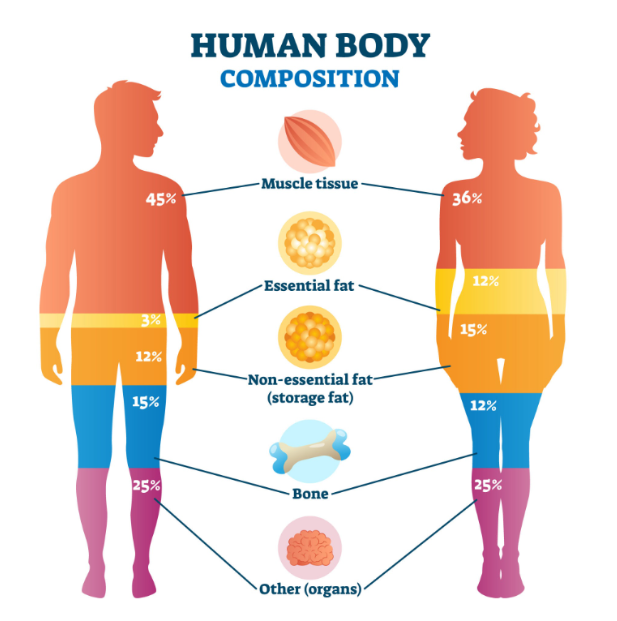
Imagine your body is a hybrid car. Fat is the gas in the tank (stored energy), and muscle is the engine. When you diet normally, you try to burn the gas and keep the engine running smoothly. But if you eat almost nothing because a medicine has completely killed your appetite, your body goes into a panic. To save energy, it starts breaking down the engine (your muscles) for fuel. This is why losing weight too fast can actually ruin your metabolism. If your "engine" shrinks, your body burns fewer calories every single day. If a person ever stops taking the medicine, the weight comes back incredibly fast because their metabolism has slowed down. To stop this from happening, patients have to do resistance training (like lifting weights or doing push-ups) to signal to the body: "Hey, we are still using these muscles, don't break them down!"
Testosterone: Medicine, Not a Cheat Code Another big topic online is Testosterone Replacement Therapy (TRT). Testosterone is a natural hormone that helps build muscle, deepens the voice, and gives you energy. Some people have a real medical condition where their body just doesn't make enough testosterone. For them, a doctor prescribing TRT is a lifesaver. It brings their hormones back up to a normal, healthy level so their body functions correctly. But here is where things go wrong: some perfectly healthy people take extra testosterone because they think it's a shortcut to getting huge in the gym. When you take extra hormones that your body doesn't actually need, your natural systems freak out and shut down your natural production. Taking these when you don't need them can lead to serious heart problems, severe acne, and major mood swings. It is a serious medical treatment, not a fitness supplement.
What About Peptides? Peptides are another buzzword you might see fitness influencers pushing. Think of peptides as tiny text messages sent to your cells. Different peptides send different messages. Some try to tell your body to release more growth hormone to recover from injuries, while others try to boost fat burning. They are very popular with "biohackers" (people who try to optimize their bodies with science). However, for a teenager, your body is already naturally producing maximum levels of growth hormone. Injecting random, untested chemicals bought off the internet can seriously mess up your natural growth plates and organs. Most doctors agree: unless a medical professional prescribes them for a specific disease, stay away.
The Reality Check Science has given us amazing tools to help people who are struggling with severe obesity or real medical conditions. But there are no cheat codes for human biology. Whether you take medicine or not, the rules of building a strong, healthy body never change. If you want to lose fat and keep your muscles strong, you have to do the hard work: eating nutritious food, getting enough sleep, and challenging your muscles through exercise. Medicine might help balance the scales, but your daily habits are the true engine of your health.
Sources & references
Listed by the author — not verified by Meal & Muscle.
- * **Wilding, J. P. H., et al. (2021). Once-Weekly Semaglutide in Adults with Overweight or Obesity (STEP 1 Trial).** *The New England Journal of Medicine*, 384(11), 989–1002.
- Supports the explanation of how GLP-1 medications (like Wegovy) suppress appetite and lead to significant body weight reduction.
- * **Sargeant, J. A., et al. (2019). A Review of the Effects of Glucagon-Like Peptide-1 Receptor Agonists and Sodium-Glucose Cotransporter 2 Inhibitors on Lean Body Mass in Humans.** *Endocrinology and Metabolism*, 34(3), 247–262.
- Validates the "hidden problem" section regarding the loss of fat-free mass (muscle, water, bone) during rapid, chemically-induced weight loss and the necessity of resistance training to preserve the metabolic "engine."
- * **Bhasin, S., et al. (2018). Testosterone Therapy in Men With Hypogonadism: An Endocrine Society Clinical Practice Guideline.** *The Journal of Clinical Endocrinology & Metabolism*, 103(5), 1715–1744.
- Confirms the section on TRT, outlining that exogenous testosterone is strictly a medical treatment for clinical hypogonadism, not a cosmetic supplement for healthy individuals, and details the severe cardiovascular and hormonal suppression risks of abuse.
- * **Jastreboff, A. M., et al. (2022). Tirzepatide Once Weekly for the Treatment of Obesity (SURMOUNT-1).** *The New England Journal of Medicine*, 387(3), 205–216.
- Provides the clinical basis for dual-agonist drugs (like Zepbound/Mounjaro) and how they target the brain's reward and hunger centers to turn off "food noise."
- * **Sigalos, J. T., & Pastuszak, A. W. (2018). The Safety and Efficacy of Growth Hormone Secretagogues.** *Translational Andrology and Urology*, 7(Suppl 1), S173–S179.
- Provides the scientific reality behind "peptides" and Growth Hormone Secretagogues (like Ipamorelin or MK-677), confirming their experimental, non-FDA-approved status for general fitness and their potential to cause insulin resistance and disrupt natural growth hormone production.

Comments
Log in or create an account to comment.
No comments yet — be the first.